
After discovering a substantial amount of Virginia Creeper in the way back on my yard, and then some more sprinkled in further forward, I decided to go on a research hunt for more information. So for Virginia Creeper as opposed to other NC poisonous plants (poison ivy/sumac/oak)! This may be helpful for other people who like hiking or have found it in their yards/outside apt 1st floor patios, etc! It is not always poisonous (via the leaves/root sap) but can be to some people, and can cause digestion issues for most animals. But what is absolutely poisonous are the berries that they make as older plants. The berries can cause serious issues, including fatalities, in children and animals if they eat them. There is additionally another plant called the false Virginia Creeper, which is just great. Lizzie Harper has put together an incredibly helpful article detailing the differences including her technical drawings.
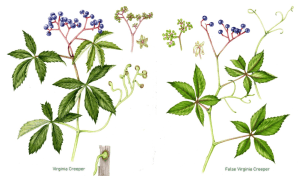
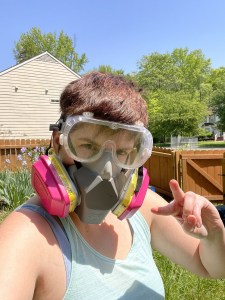
Mowing it (false or real) will cause it to spread. Leaves, seeds, bits of vine, and roots are all capable of propagating the vine. (And I am probably responsible for the amount that’s in the back grassy part of the yard from previous years of mowing back there 😭) Now, considering that it’s majorly growing in the BACK of my yard where we don’t have many other plants, there are shade-loving non-toxic plants that can outcompete it, and also reduce the likeliness of kids parading through well established plants. To start though and in full protective outfit, Virginia Creeper is easier to pull than other plants because of it’s root formation. It’s an underground vine which is closer to the surface on the younger sprigs, so often if you start pulling up one – you get more in a line. And I was right (na-na-boo-boo, Will!) about using a breathing mask and eye goggles when navigating/pulling/weedwhacking around/near the poison ivy and sumac. Though now, I need to make sure I don’t weedwhacker any more of Virginia Creeper (by accident or on purpose) so it doesn’t spread.
 See here, the Vagabond For Honey